A crack gets your attention because concrete looks permanent. In reality, concrete shrinks as it cures and responds to changes in temperature, moisture, soil and load. A crack can be cosmetic, a sign of movement below the slab or something in between. The useful question is not simply, “Is there a crack?” It is, “What is the crack doing, and what is happening around it?”
Start with the pattern, not just the width
First, step back and look at the whole slab. Does the crack follow a control joint, run from an inside corner, cross several panels or sit near an unsupported edge? Is it isolated, or are nearby sections also settling, tilting or breaking apart? The pattern often tells you more than one close-up photo.
Take one wide photo that shows the crack's location and a few close photos of the surface. Note the date and whether the slab is wet or dry. If you check it again after a season, you will have something useful to compare instead of relying on memory.
- Photograph the full panel and the close-up detail.
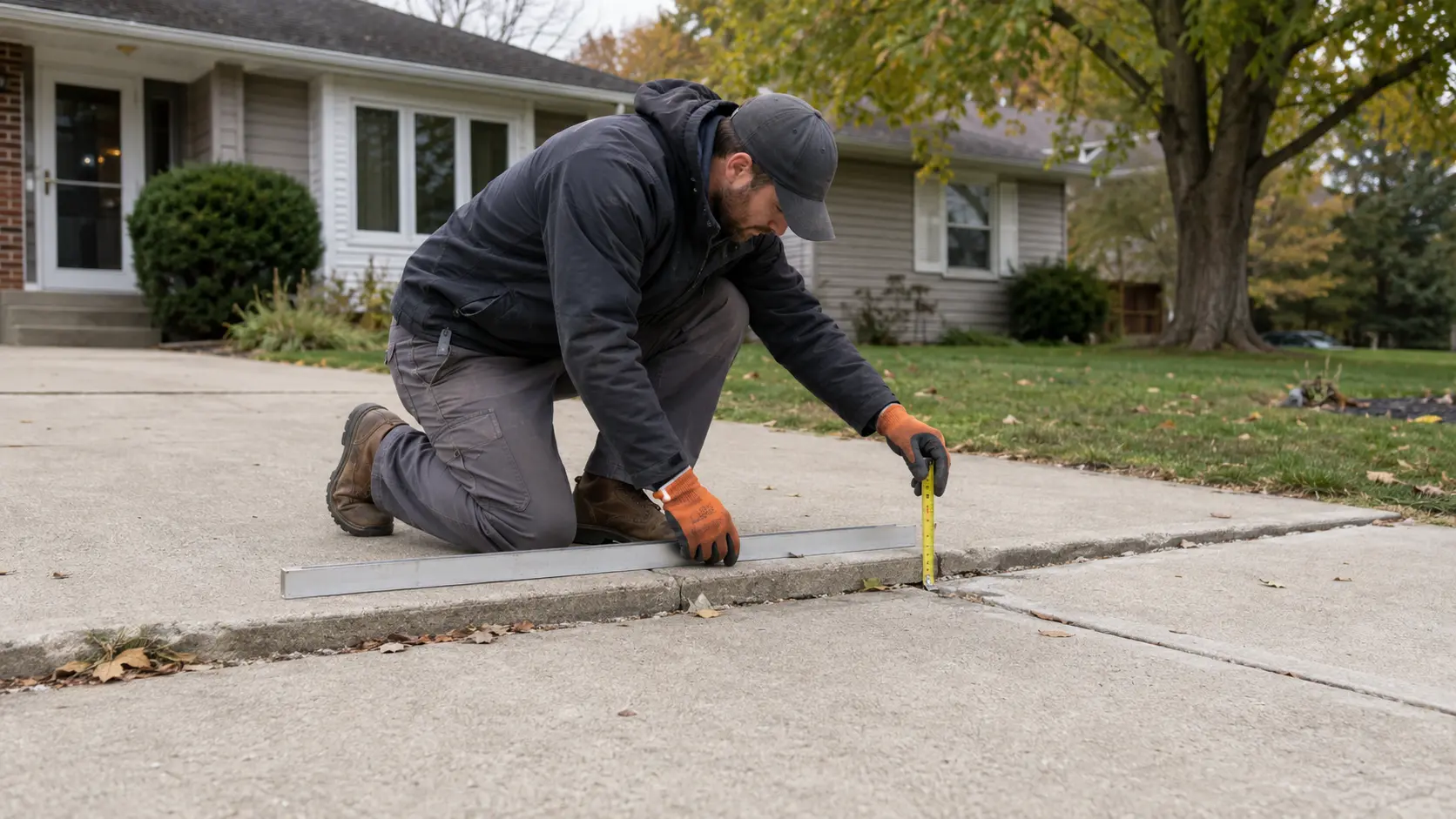
- Note whether the two sides are still level.
- Look for water, soft ground or an empty space along the edge.
- Record whether the crack changes after winter or heavy rain.
Control joints manage cracking—they do not erase movement
Concrete loses volume as it cures. Control joints create planned, weaker lines where that shrinkage movement can occur with a cleaner appearance. A crack that forms within a joint may mean the joint is doing its job.
Joints cannot guarantee that every crack will stay hidden. Panel shape, corners, timing, weather, base support and the way the slab is restrained all influence where stress is relieved. Reinforcement can help sections stay together, but it does not make concrete crack-proof.
Level cracks and displaced cracks are different conversations
A narrow crack with both sides remaining level is generally a different condition from a crack where one side has lifted or dropped. Vertical movement can create a trip point, interfere with snow removal and suggest that the support below the slab has changed.
Pay attention to a crack that is widening, branching, shedding pieces at the edges or changing the way water moves. Those visible changes are more useful to a contractor than a label such as “hairline” or “large.”
In Wisconsin, follow the water
Central Wisconsin gives exterior concrete repeated wet, frozen and thawed conditions. Water beside or beneath a slab can contribute to soil movement, erosion and recurring ice. Look uphill from the crack: roof downspouts, low landscaping, snow piles and runoff from another hard surface may all feed the same area.
Also look at the outlet. Water should have a practical route away from the slab and the home. Filling the visible crack without addressing a drainage or support problem may improve appearance while leaving the cause untouched.
Edges, loads and transitions deserve a closer look
Driveway edges can be vulnerable when vehicles repeatedly travel or park close to an area without solid support beside it. Cracks may also form where a slab changes shape, narrows, meets steps or connects to older concrete. Those are natural stress locations and should be considered in the original joint and base plan.
Tell the contractor how the surface is used. A delivery truck, trailer, dumpster or skid steer creates a different load than normal passenger vehicles. That history can help explain why one area changed while the rest of the slab did not.
When to monitor it—and when to make a call
A stable, level crack can often be documented and watched through the next seasonal cycle. Keep the area clean, limit water collecting along it and follow the original contractor's care guidance before applying a repair product.
Ask for an evaluation sooner when the crack creates vertical displacement, continues to open, directs water toward the garage or home, appears with settling or heaving, or is accompanied by widespread surface breakdown. A sudden change after excavation, a heavy load or a drainage event is also worth mentioning.
- Monitor: the sides remain level and the crack appears stable.
- Call: one side lifts or drops, creating a trip or plow edge.
- Call: the surrounding panel settles, rocks or loses support.
- Call: water repeatedly enters, ponds or changes direction at the crack.
- Call: the surface is breaking apart beyond the crack itself.
Do not choose a repair before you understand the cause
Crack fillers, sealants, patch materials and slab-lifting methods solve different problems. The right choice depends on whether the goal is limiting water entry, improving appearance, restoring support or correcting a trip point. A rigid patch placed across a moving crack may simply crack again.
Before repairing, ask what the repair is expected to do and what it will look like afterward. Most repairs remain visible. A straightforward explanation of the cause, the goal and the limits of the repair is more useful than a promise that the crack will disappear.
These guides are general planning information, not a project specification. The slab or site, intended use, selected system and local requirements should be evaluated for the property.