Concrete in the Wausau area has a demanding job. It sees rain, snow, plows, road salt, repeated freezing and thawing, and large seasonal temperature swings. There is no single detail that makes a slab last. Long-term performance comes from a series of decisions made before, during and after the pour.
Water is the issue to plan around
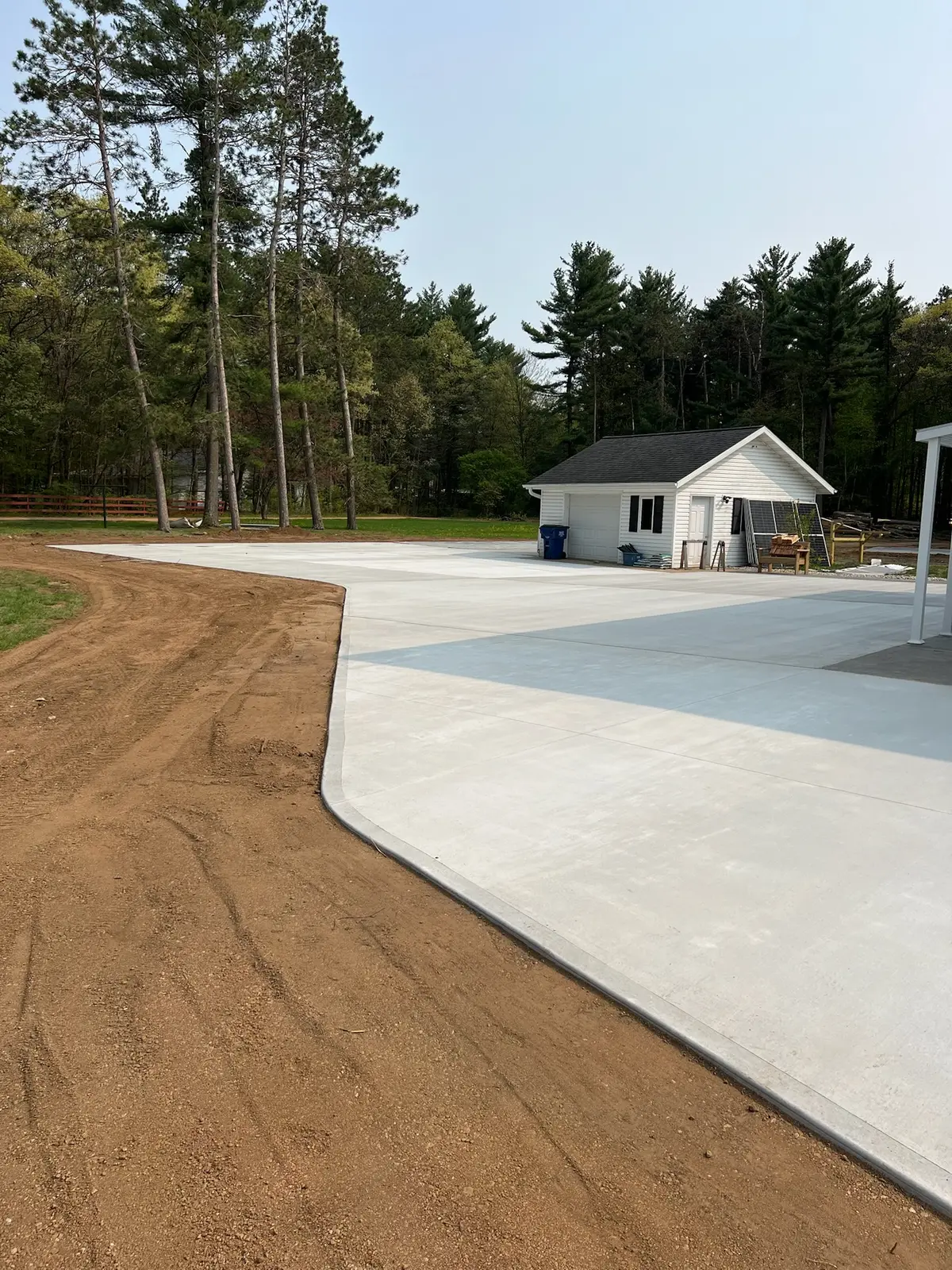
Cold alone is not the whole problem. Trouble grows when water reaches the concrete or the soil beneath it, freezes, expands and repeats that cycle. A driveway or patio should be planned so surface water moves away instead of settling along an edge or low spot.
The surrounding grade, downspouts and snow-storage areas all affect that movement. Those details are worth discussing during the site walk because the concrete cannot solve a larger drainage problem by itself.
The slab is only as steady as what is under it
A properly prepared base gives the concrete consistent support and helps manage moisture below the slab. The right excavation and base approach depends on the site, soil, access and intended use. A driveway carrying full-size vehicles has different demands than a backyard walk.
This work disappears once concrete is placed, but it is not the place to rush. Soft areas, inconsistent support or trapped water can create movement that shows up later at the surface.
Joints and reinforcement each have a job
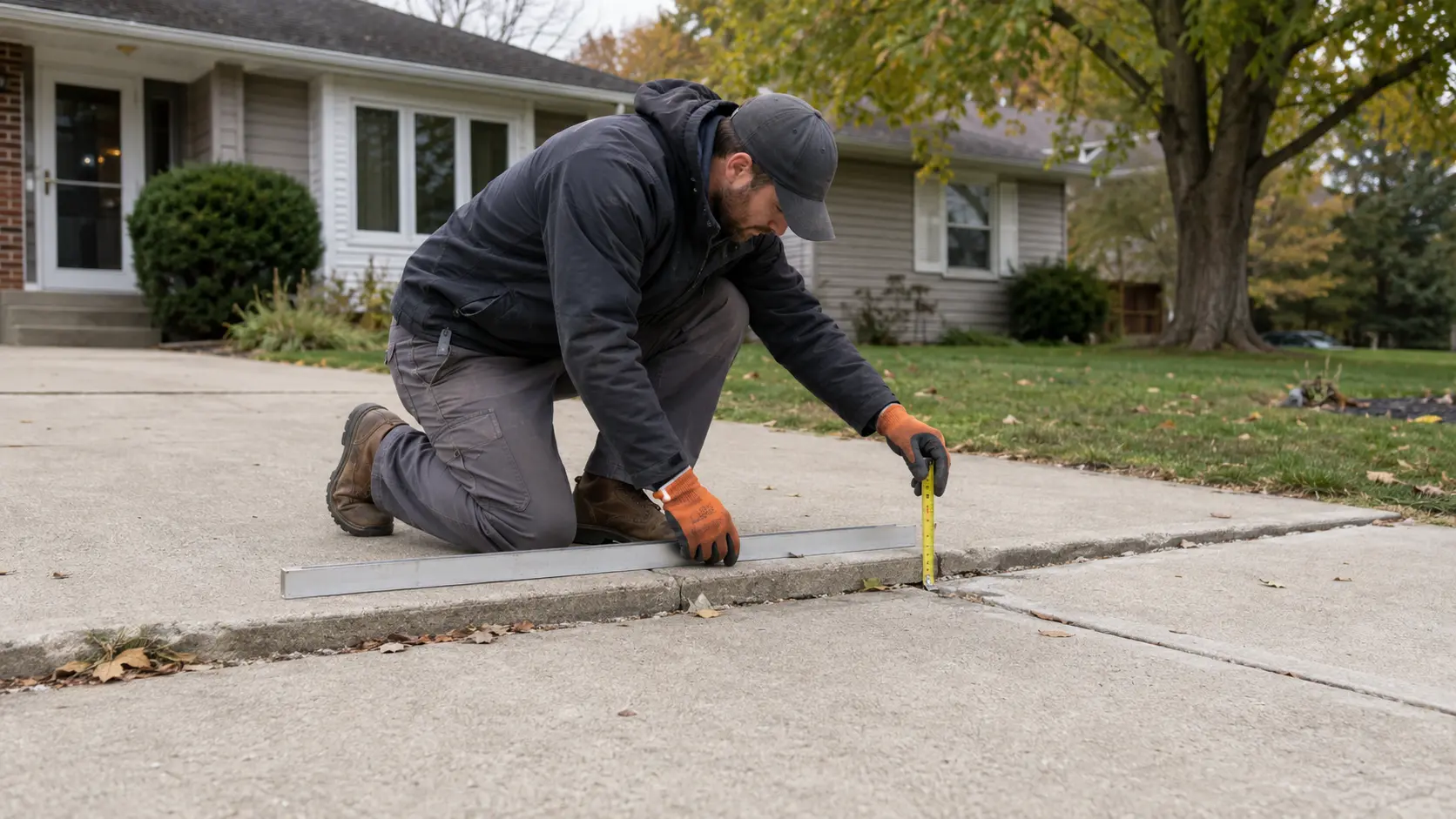
Concrete naturally shrinks as it cures and moves with temperature changes. Control joints create planned locations for that movement. Their layout should account for the slab shape, transitions, corners and other stress points.
Reinforcement can help hold sections together and manage movement, but it does not eliminate the need for sound base preparation or a sensible joint plan. The full system matters more than any one feature.
Placement, finishing and curing matter
The concrete mixture, weather window, placement, finishing and curing approach all affect the finished surface. Finishing too early or overworking a wet surface can create problems. So can putting a new slab into service before it has developed enough strength.
Your contractor should give you project-specific guidance for foot traffic, vehicles, sealing and early care. Follow that guidance even when the surface looks finished—the curing process continues after the crew leaves.
Winter care starts with reasonable expectations
Plowing and shoveling before packed snow becomes ice reduces the need for aggressive deicing. Use care with metal edges and equipment that can scrape or chip corners. Deicing products vary, and some can be hard on concrete, especially when it is new.
Before the first winter, ask what products and maintenance practices are appropriate for your specific slab. A little restraint and regular snow removal can do more good than repeatedly applying an unknown chemical mix.
- Keep water and downspout discharge from collecting beside the slab.
- Remove snow promptly and avoid striking exposed edges with equipment.
- Follow the contractor's timing for traffic, sealing and winter care.
- Bring up drainage, vehicle use and snow storage before the scope is finalized.
These guides are general planning information, not a project specification. The slab or site, intended use, selected system and local requirements should be evaluated for the property.