A damaged driveway does not always need to be torn out, and a cosmetic patch does not always fix the real problem. The useful decision starts with the pattern: where the damage appears, whether adjoining panels remain level, how water moves and what loads the driveway carries. Looking at the whole surface helps separate a small repair from a larger performance issue.
Map the damage before choosing a remedy
Walk the driveway from the street to the garage and note every crack, broken corner, low panel, spalled area and failed joint. Take wide photos that show how the damaged areas relate to one another, not only close-ups of the worst spot.
One stable crack in an otherwise level driveway is a different problem from repeated cracking across several panels. A broad pattern may point to drainage, support, thickness or loading conditions that a surface patch cannot change.
Level differences matter in Central Wisconsin
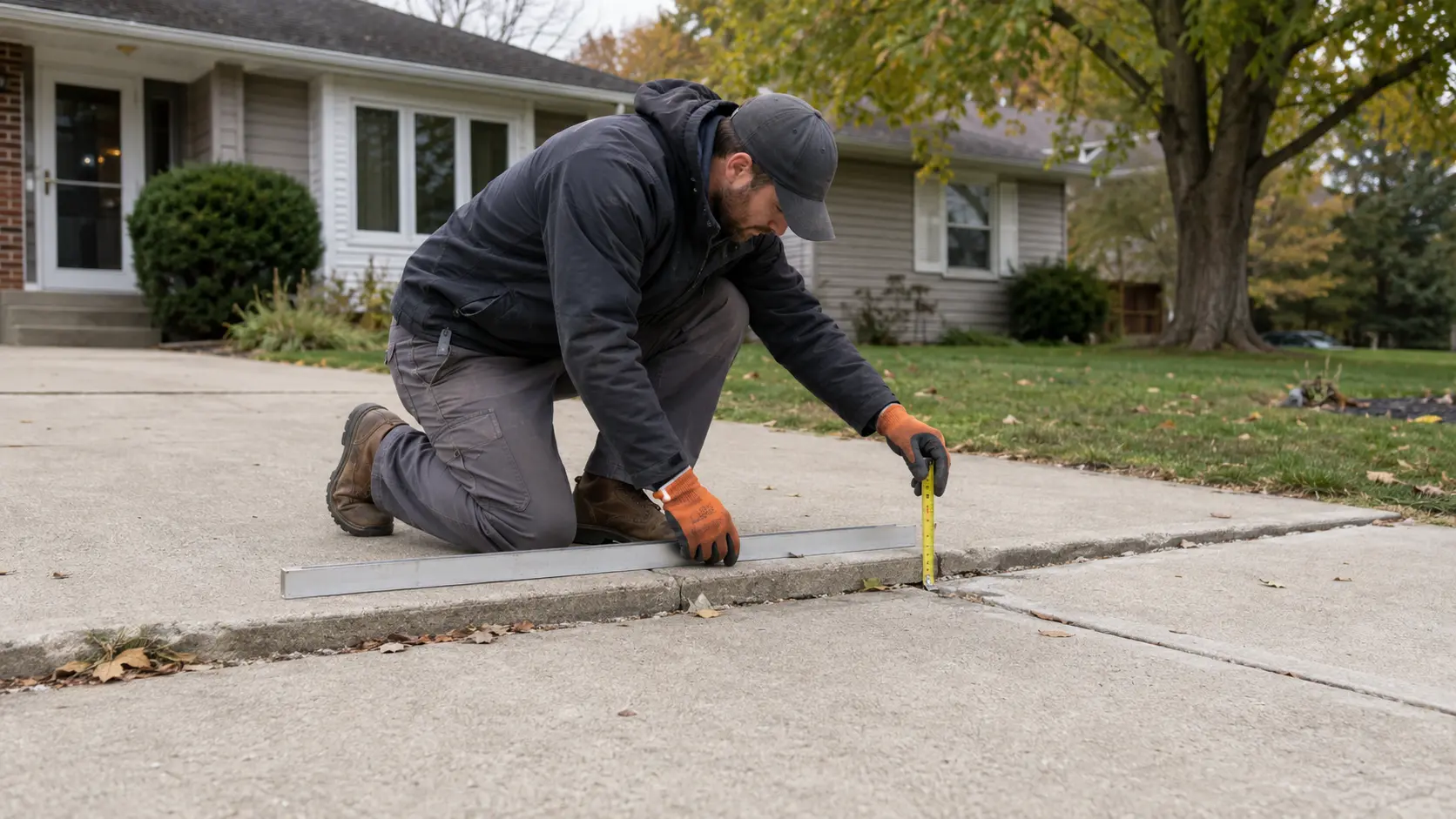
Freeze-thaw cycles can make a small height difference more noticeable, and raised edges create problems for shovels, snowblowers, tires and walking. Measure the change and note whether it appears to grow after winter or heavy rain.
If adjoining panels have moved relative to each other, ask why before covering the symptom. Water, poorly supported edges, disturbed soil, tree roots or repeated heavy loads may need to be considered in the repair plan.
Surface wear and structural movement are not the same
Scaling, pitting and shallow surface deterioration can be widespread without every slab panel moving. Repairs or overlays may be possible in some conditions, but the remaining concrete has to be sound enough for the selected material and preparation method.
A coating or resurfacing layer will not pull separated panels back together or restore support below a moving slab. Ask what the proposed repair is designed to improve: appearance, water entry, trip edges or the underlying movement itself.
Drainage can decide the scope
Watch the driveway during rain and spring melt. Water that ponds, runs toward the garage or repeatedly reaches an unsupported edge can shorten the value of a repair. Downspouts and adjacent landscaping may also be directing water into the problem area.
Replacement creates an opportunity to reconsider elevations, slopes and transitions. That does not mean every drainage problem requires a new driveway, but the water path belongs in the estimate either way.
Compare repair and replacement as complete scopes
A low repair price can leave demolition, edge matching, joint work, drainage changes or finish differences unresolved. A replacement quote can also be incomplete if it does not identify removals, base preparation, thickness, reinforcement approach, finish and access constraints.
Ask each contractor to explain what stays, what is removed and what condition the work is expected to correct. Compare the expected result, useful life and full scope of each option.
- Document cracks, settlement, surface wear and drainage in wide photos.
- Note regular trailers, campers, work trucks or other concentrated loads.
- Ask whether the damage is stable or still moving.
- Compare transitions, base work, thickness, finish and cleanup.
- Expect repaired areas to remain visually different from older concrete.
These guides are general planning information, not a project specification. The slab or site, intended use, selected system and local requirements should be evaluated for the property.