A Wisconsin winter does not automatically put every garage floor project on hold. It does make the installation plan more important. The slab, surrounding air, stored materials and cure period all have to stay within the requirements of the selected coating system. A heated garage can be a workable setting, but the answer depends on more than the thermostat on the wall.
The slab temperature matters more than the calendar
A garage can feel comfortable while the concrete remains much colder, especially near the overhead door and exterior walls. Installers should evaluate the slab itself and follow the material manufacturer's limits for every layer of the system.
The temperature also needs to remain controlled after application. Heating the room for a few hours and allowing it to cool sharply overnight can create a very different cure environment than the estimate assumed.
Winter moisture can arrive in several forms
Snow, road salt and vehicle meltwater are the obvious concerns. Condensation is less visible: cold concrete can collect moisture when warmer, humid air enters the space. Moisture moving through the slab can also affect what preparation, primer or testing is appropriate.
The floor should be empty, clean enough to inspect and allowed to dry before final preparation begins. Dark areas, recurring dampness, efflorescence or previous coating failure deserve attention before a new system is specified.
Surface preparation does not become optional in winter
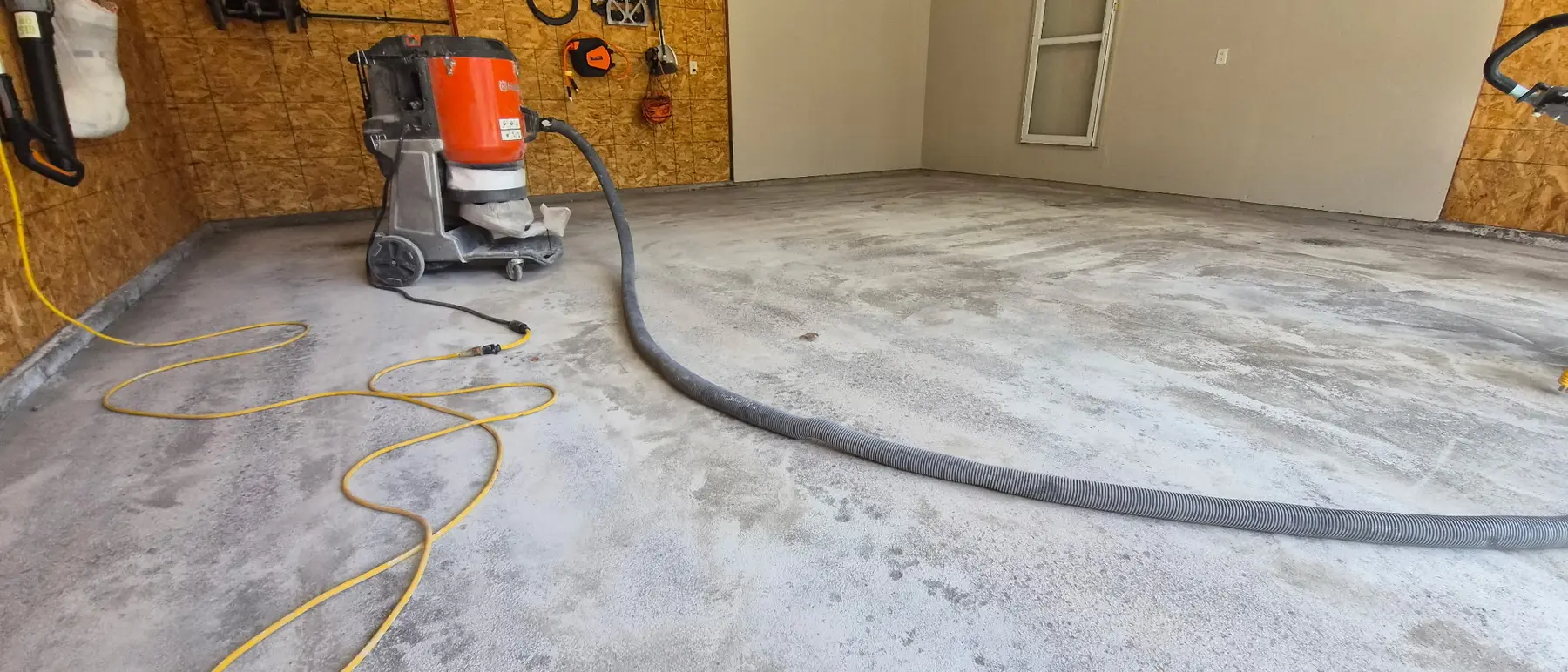
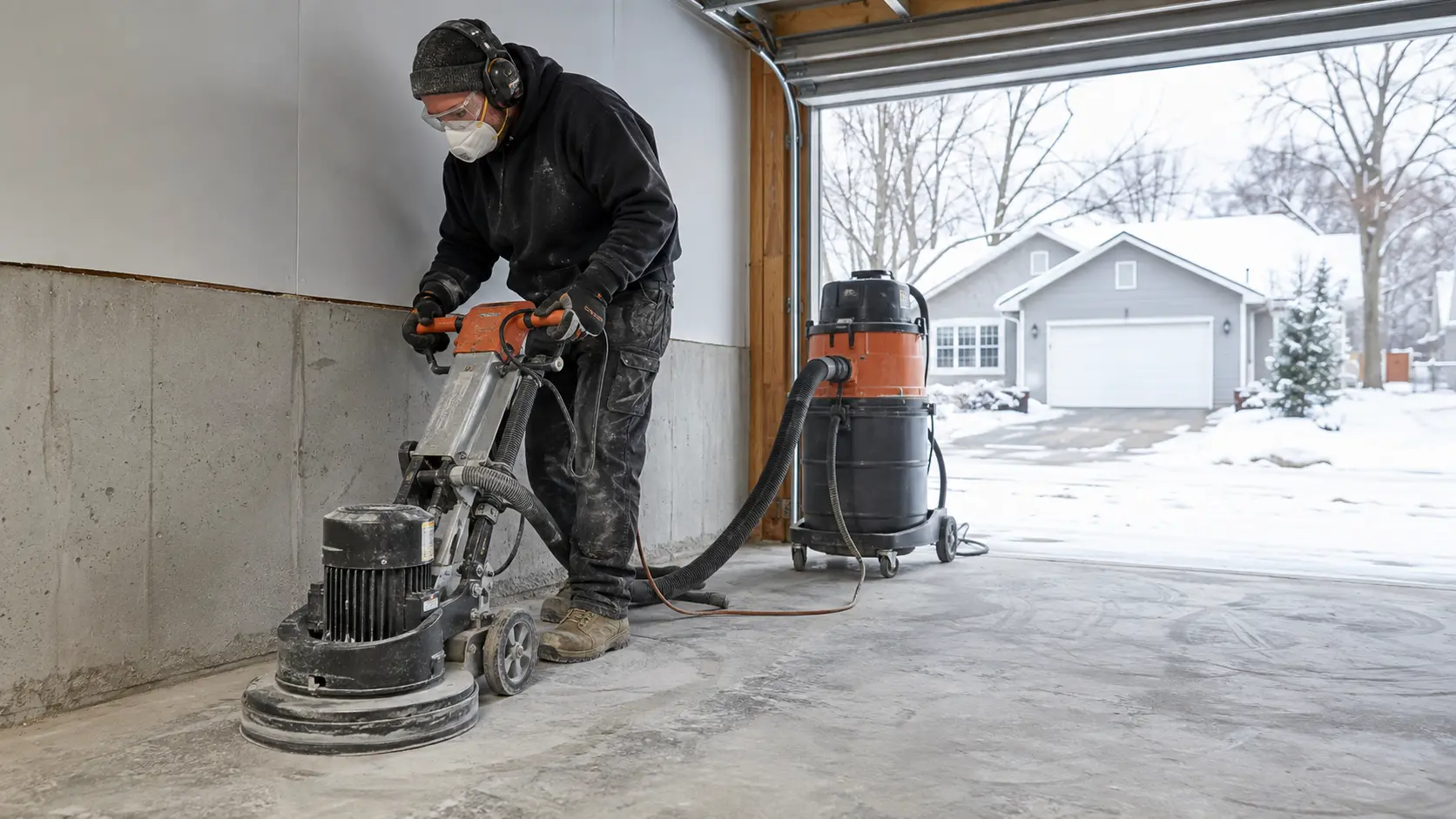
Cold weather is not a reason to replace mechanical grinding with a quick wash or acid treatment. The coating still needs a clean, appropriately profiled surface. Existing paint, weak material, contamination and incompatible repairs still have to be addressed.
Dust collection and ventilation should be planned together. The crew needs to manage grinding dust and material vapors without leaving doors open so long that the slab falls outside the required installation conditions.
Temporary heat needs a complete plan
The heat source, air movement and exhaust strategy can affect both safety and cure conditions. A proposal should explain who provides the heat, when it starts, how long it must remain and what access is needed during the cure period.
Homeowners should also confirm where vehicles, snow equipment, shelving and stored items will go. A garage floor project needs the entire space, not only the open driving lanes.
Ask when the floor can be used again
Walking on the floor, moving light storage back and parking a vehicle may have different timelines. Temperature, humidity, layer thickness and the exact coating products can all change those windows.
Get the instructions in writing for the actual system being installed. Avoid choosing a contractor based only on the shortest advertised one-day turnaround; a clear preparation and cure plan matters more than the slogan.
- Confirm the slab and air conditions required for every coating layer.
- Confirm how heat and ventilation will be maintained.
- Remove vehicles, salt, water and stored items before preparation.
- Ask how cracks, joints and moisture concerns will be handled.
- Get separate return-to-use times for walking, storage and vehicles.
These guides are general planning information, not a project specification. The slab or site, intended use, selected system and local requirements should be evaluated for the property.