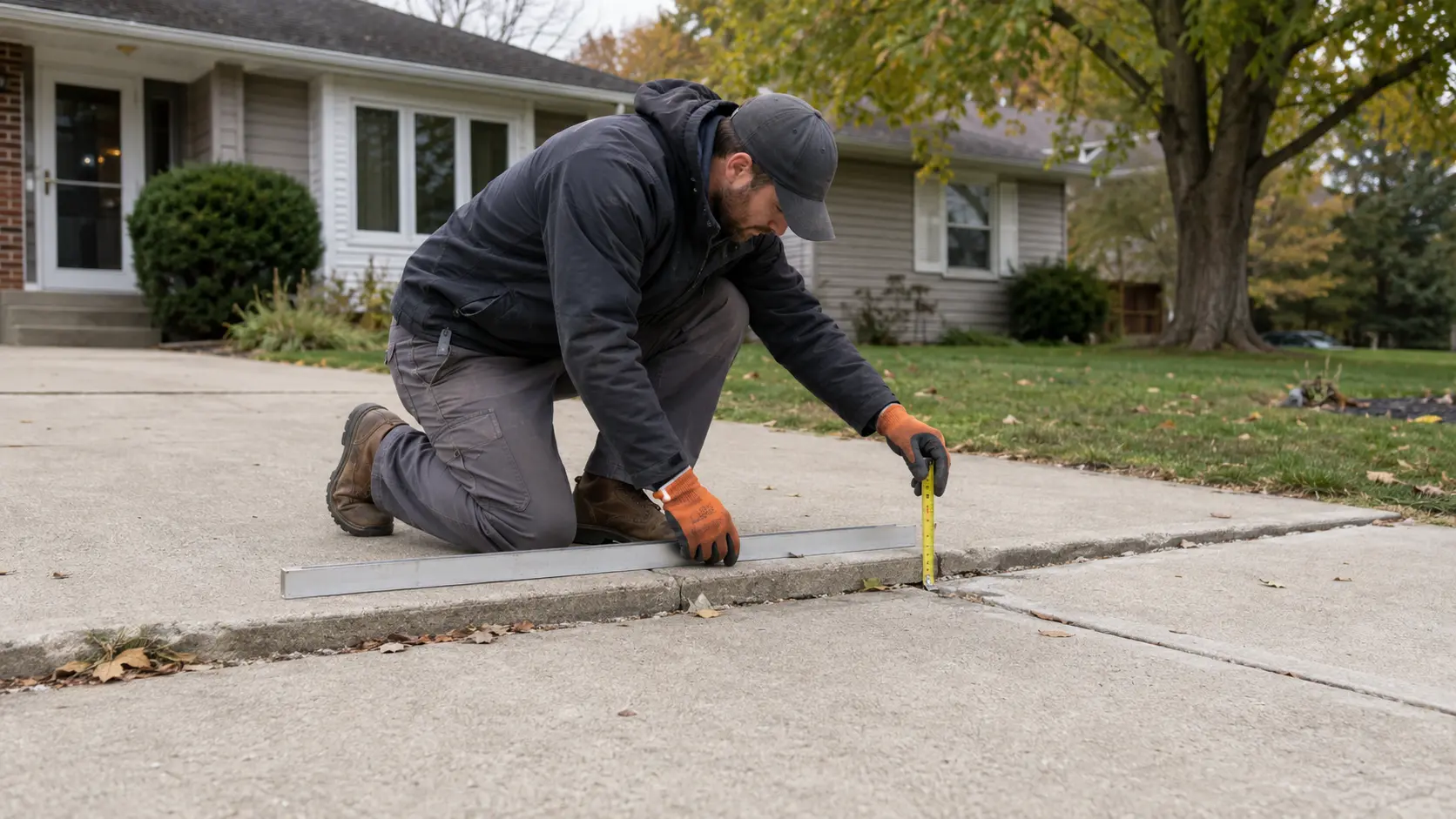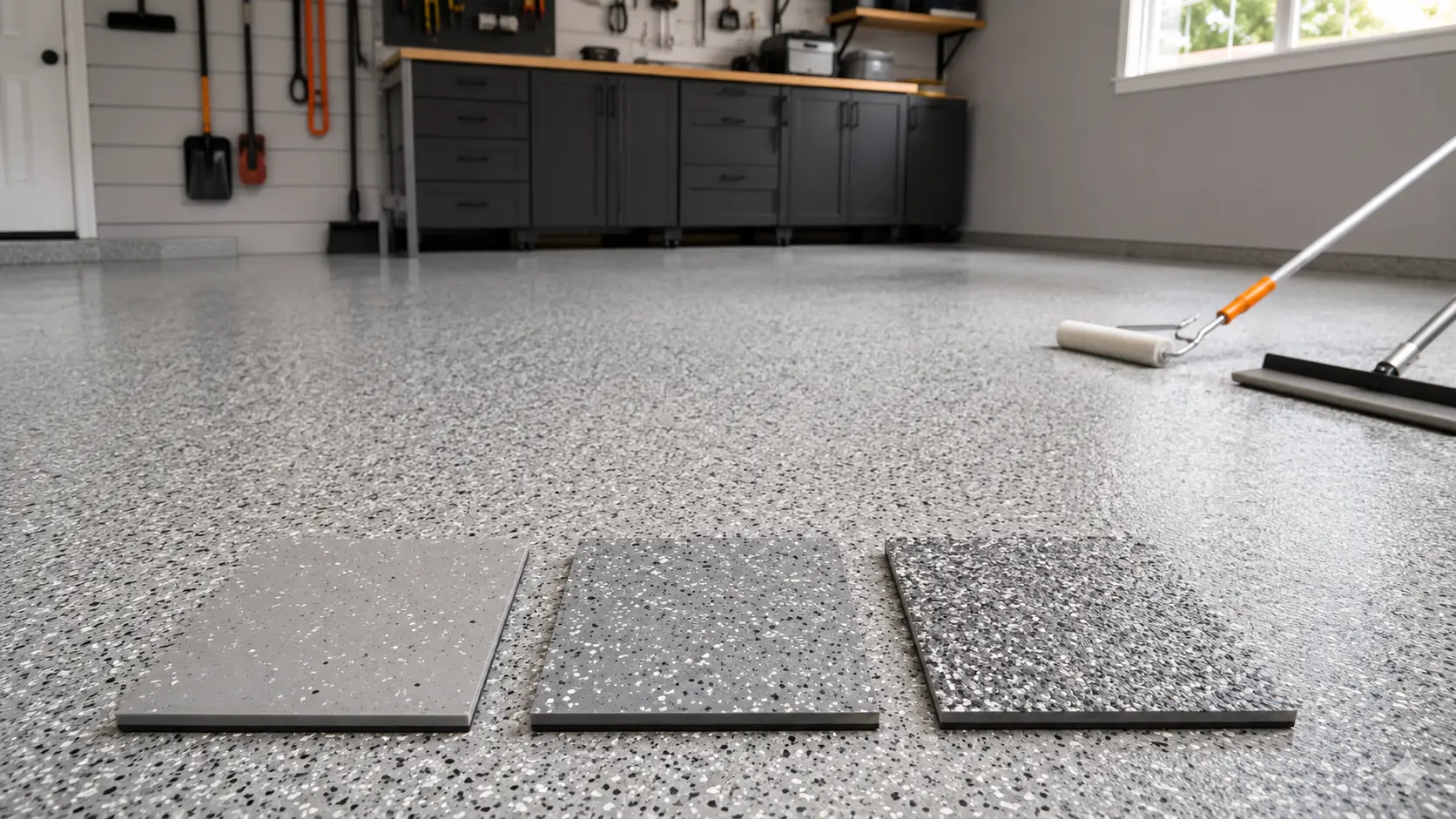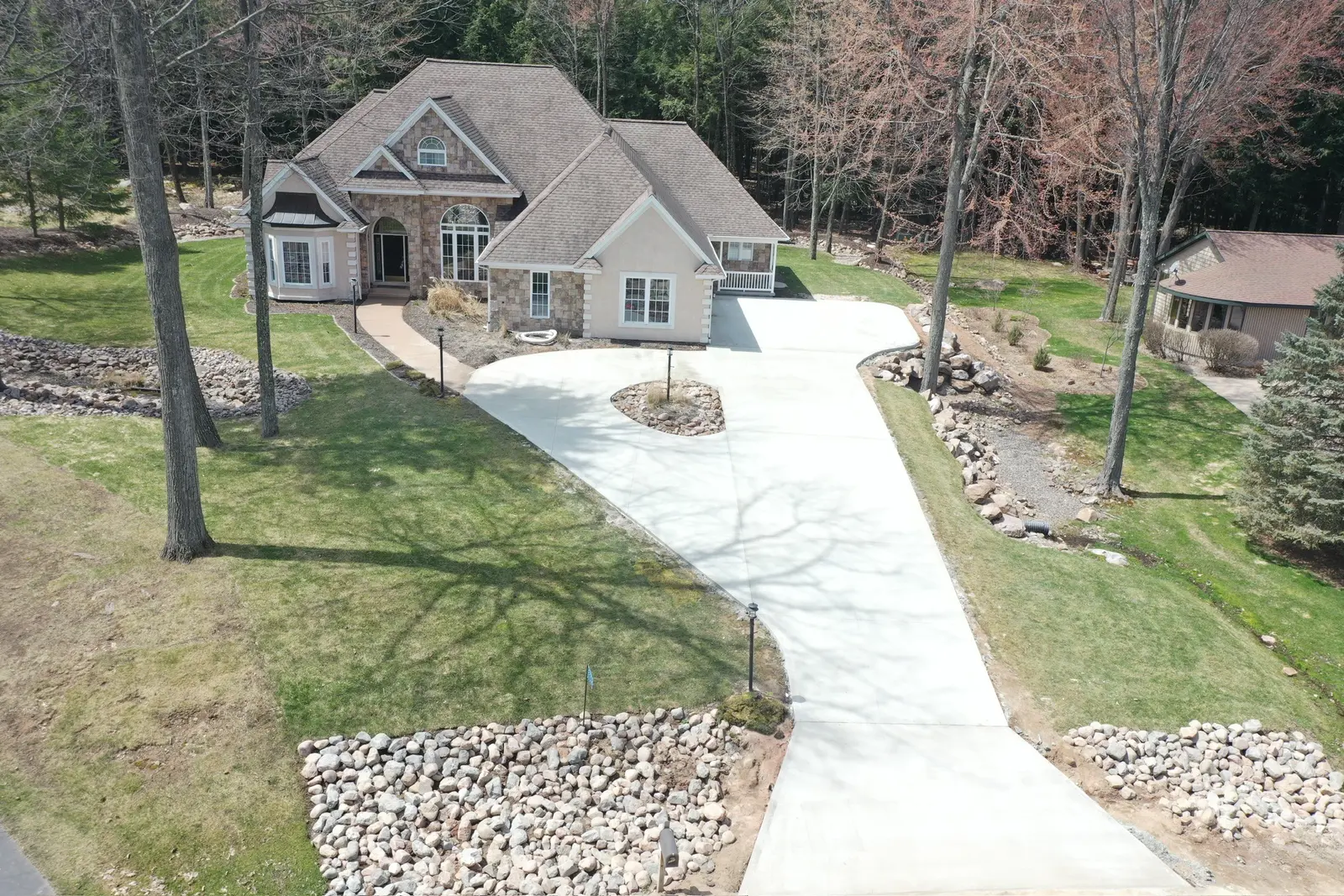
A residential driveway is one of the hardest-working surfaces on a property. It handles daily vehicles, deliveries, snow removal, runoff and the transition from the road to the garage. The best time to solve those needs is before forms are set.
Start with how the driveway is actually used
Count the vehicles that need to park and move comfortably, then think beyond an ideal day. Where does a guest stop? Can a delivery vehicle turn around? Is there room to back out when another car is parked? Does a trailer or larger truck use the drive?
A small change in width or a well-placed flare can make daily use easier. It can also add meaningful material and site work, so those choices should be intentional rather than discovered during the pour.
Look at the whole water path
The driveway needs a clear drainage strategy from the garage to the street or an appropriate discharge area. Existing grades, roof runoff, neighboring surfaces and low points all influence the plan.
If water already collects near the garage, runs across a walk or freezes in a recurring spot, point it out during the site visit. New concrete should not simply lock an old drainage problem into place.
Choose the finish for use as well as appearance
A traditional broom finish offers a clean look and practical traction. Decorative borders, color or stamped areas can add character, but the finish still has to make sense for vehicle traffic, snow removal and the architecture of the home.
Ask to see real completed work and view finish samples outdoors. Color and texture can look different in sun, shade and wet conditions than they do on a screen.
Plan for the construction window
Driveway work affects access to the garage and home. Removal, excavation, base preparation, forming, placement and curing all take space and time. Weather can also move the schedule because a quality pour should not be forced into a poor window.
Before work begins, confirm where vehicles will park, how the crew will reach the site, what landscaping or utilities are near the work and when normal vehicle traffic can resume.
What should be clear in the quote
A useful proposal should describe the area and intended use, removal or excavation included, base and reinforcement approach, finish, major transitions and cleanup. Site-specific unknowns should be discussed rather than hidden.
The least expensive scope is not always the lowest-cost outcome. Compare what is actually included and whether the contractor has addressed the way water, vehicles and winter maintenance affect the property.
- Approximate dimensions and intended vehicle use
- Removal, excavation and access assumptions
- Drainage direction and key elevations
- Finish, joints, reinforcement and edge details
- Curing, traffic and care instructions
These guides are general planning information, not a project specification. The slab or site, intended use, selected system and local requirements should be evaluated for the property.