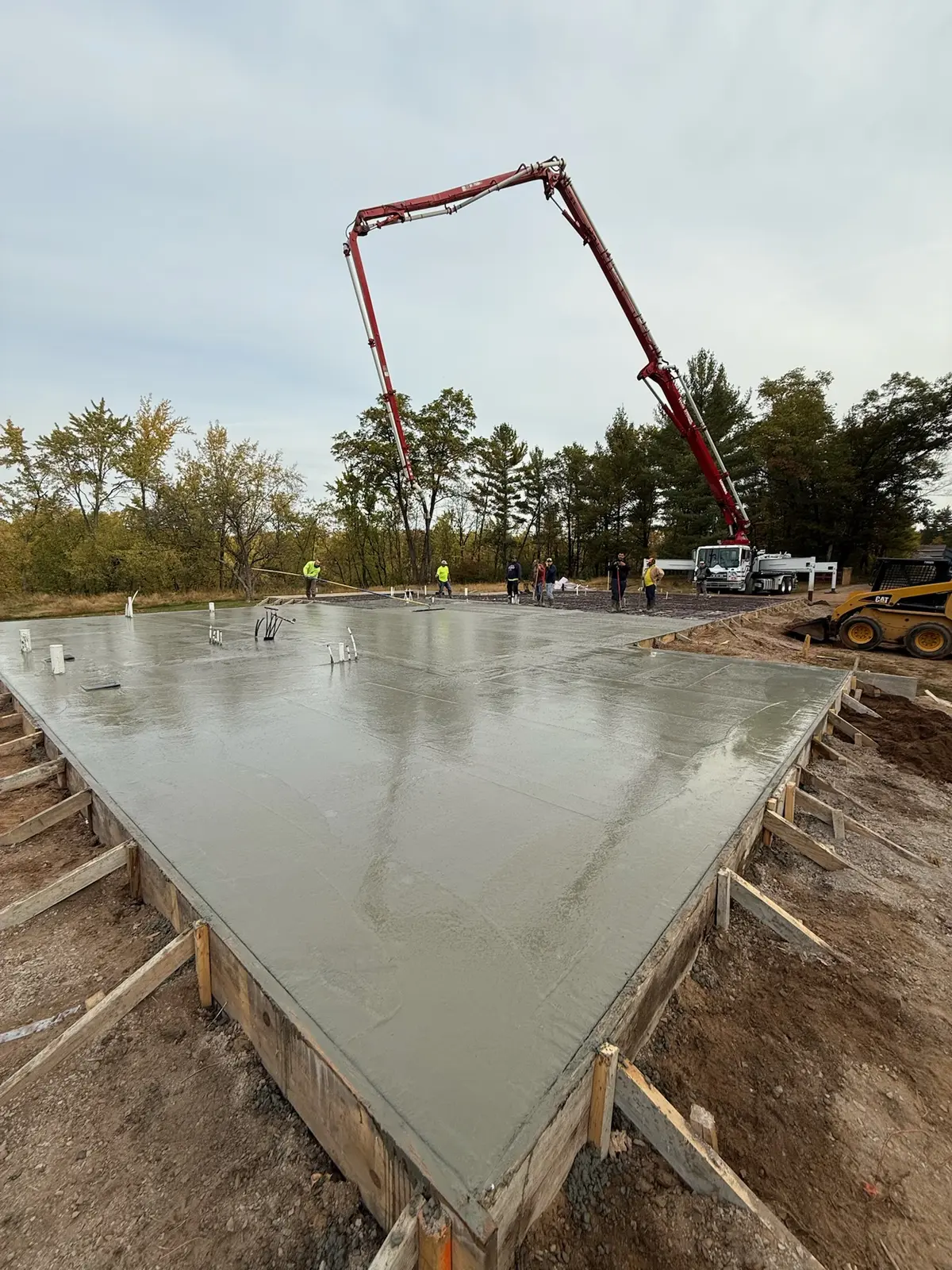
Central Wisconsin's concrete season does not begin or end on one universal date. A successful pour depends on current and expected weather, ground conditions, the project type and the contractor's ability to protect and cure the work. The calendar helps with planning, but the actual conditions make the decision.
Mild, stable conditions are easiest to manage
Moderate temperatures and a stable forecast generally give crews a more forgiving placement and finishing window. Very hot, dry or windy weather can pull moisture from the surface quickly. Cold conditions slow strength development and can require added protection.
Experienced crews adjust methods to the conditions, but not every weather window is worth forcing. A short delay can be the right call when the forecast adds unnecessary risk.
The ground matters as much as the air
Spring can bring saturated soil and soft access even when daytime temperatures feel comfortable. Late-season air temperatures may look workable while the ground is cold or an overnight freeze is approaching.
Excavation, base preparation and concrete delivery all depend on a site that can support the work. The yard, driveway access and discharge route need to be considered along with the pour area itself.
Rain affects more than the finish
Rain can soften the prepared site, complicate delivery and affect fresh concrete. The amount, timing and project stage all matter. A forecasted shower is different from a saturated week or active rain during finishing.
Avoid treating schedule changes as a lack of planning. Weather judgment is part of the work, especially on exposed residential sites.
Curing continues after placement
Concrete does not become ready for every use the moment the finish is complete. It gains strength over time, and early moisture and temperature conditions influence that process.
The appropriate timing for foot traffic, furniture and vehicles depends on the mix, conditions and application. Follow the project-specific instructions from the contractor instead of relying on a generic number found online.
Schedule early, then stay flexible
Homeowners can plan ahead by requesting a site review before the desired construction window, making finish decisions early and explaining any hard deadline. The contractor can then build the project into the seasonal schedule while keeping room for weather.
The best date is the one that gives the site, crew and concrete a sound window to do the job correctly. In Wisconsin, allowing for weather changes is part of a realistic schedule.
These guides are general planning information, not a project specification. The slab or site, intended use, selected system and local requirements should be evaluated for the property.